Get the clinical capability your institution actually needs.
Not every clinical need requires a full-time hire. Not every staffing vacancy reveals the actual capability gap. CCI develops methods to help institutions identify unmet clinical demand, measure capability requirements, and evaluate appropriately sized solutions.
Four steps to a better capacity decision
Discover demand
Identify clinical work that is visible, absorbed, shifted or deferred.
Measure requirements
Determine the scope, response time, continuity and constraints the work requires.
Size capability
Translate requirements into appropriately sized clinical capacity.
Evaluate arrangements
Compare ways to supply capability without assuming a predetermined staffing model.
Questions for institutional capacity decisions
What work needs to be done? What capability does it require? How much? With what response time, continuity, redundancy, physical presence and other constraints? How do we know?
Identify demand beyond utilization
Formal utilization can reveal important demand. Other meaningful work may be absorbed, shifted, deferred, coordinated informally or otherwise remain less visible.
Size the required capability
CCI is interested in translating work into the amount and characteristics of capability required—not assuming that the answer begins as an FTE count.
Evaluate delivery and activation
Compare employment, contracting, telemedicine, fractional capacity and other arrangements against institutional constraints, response-time expectations, reliability, time-to-capability and cost—not a predetermined staffing answer.
Adjust capacity as demand changes
The right capacity today may not be the right capacity tomorrow. CCI examines when evidence supports increasing, holding, tapering, parking or graduating capacity—and what each change costs.
Flexibility is not free cancellation. Notice, continuity, physician commitments and allocation of transition risk all matter. Explore reversibility and risk allocation →
From observed demand to an institutional decision
CCI's working measurement architecture separates the capacity state, expansion threshold, marginal demand absorption, capability requirement, delivery constraints and capacity titration. These are exploratory decision aids, not validated instruments.
Time-to-Capability is a related question: how long does it take to activate a needed clinical capability, including permissioning and other delays after a physician is otherwise ready? A separate assessment instrument is in development; it is not yet published.
Institutions retain authority over their capacity decisions; physicians retain authority over their professional commitments. CCI measures requirements objectively rather than advocating a predetermined employment or contracting model.
Review the Working Architecture → · See Instrument Maturity → · Contribute an Institutional Perspective →
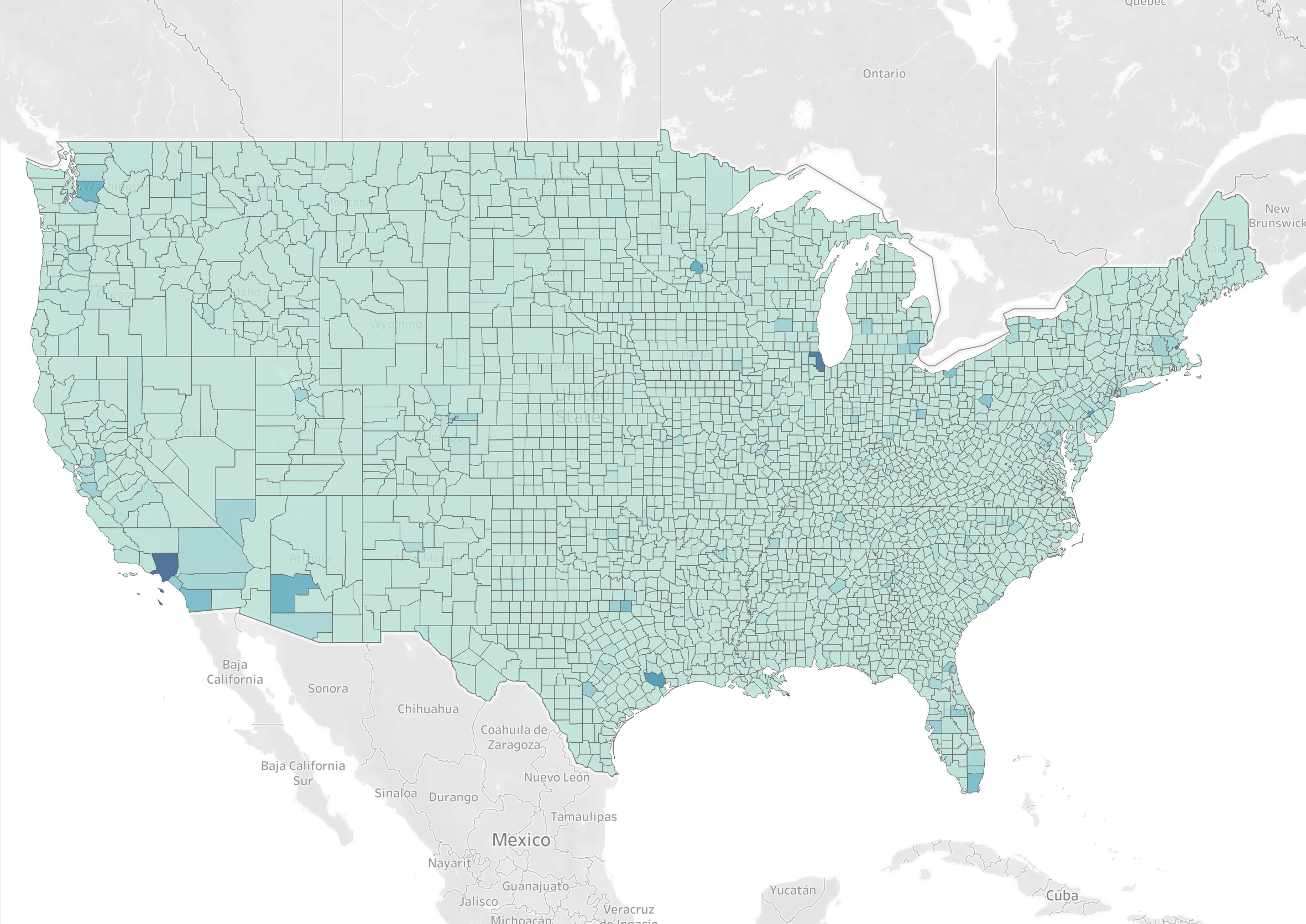
The CCI Specialty Atlas
Explore the geography of clinical specialties across the United States—and what workforce counts can and cannot tell us about actual clinical capacity.
Our working Atlas spans 60 clinical classification layers and 3,144 U.S. counties. Beginning in 2027, CCI plans a 30-week series introducing two specialty layers each week.
Learning before inventing
CCI examines existing methods, literature and prior art; learns from practitioners, founders and operators; develops working instruments where useful; and looks deliberately for evidence that should change the model.
From the CCI Substack
Recent essays, emerging questions, and research updates published separately from CCI’s permanent research pages. New posts appear here automatically.
Loading recent Field Notes…
Retrieving the latest essays from CCI’s Substack.
Where this inquiry came from
CCI began more narrowly with rural specialty access, specialist presence, fragmented demand, Tele-ID and fractional specialty capacity. Following those questions upstream produced the broader requirement question.
Rural settings remain important. Infectious diseases remains an important application. Fractional capacity remains a possible delivery architecture. None is assumed to define the underlying phenomenon or predetermine the answer.
Four ways into the work
Explore the Inquiry →
What CCI is trying to understand now.
See the Working Architecture →
A provisional decomposition of the capacity decision.
Trace Sources & Lineage →
What existed before CCI, what we are adapting, and where prior art remains unresolved.
Read Field Notes →
The working intellectual conversation behind the institutional record.